Jack Pixley Chimney Sweeps: Comprehensive Chimney Inspection in Anoka, MN
Living in Anoka means understanding the bite of a Minnesota winter. When the temperatures drop and the snow begins to pile up, your fireplace becomes the heart of the home. At Jack Pixley Chimney Sweeps, we understand that a fireplace is more than just a heat source. It’s a gathering place for friends and family. However, the systems that vent these appliances are complex and require regular attention to operate as safely as possible. We provide detailed, professional chimney inspections that help you understand the true condition of your flue and masonry. Whether you are in a historic home near the river or a newer construction, our team uses advanced diagnostics to spot issues before they become major hazards.
Can a Single Missed Annual Inspection Allow Enough Creosote to Ignite a Chimney Fire the Following Season?
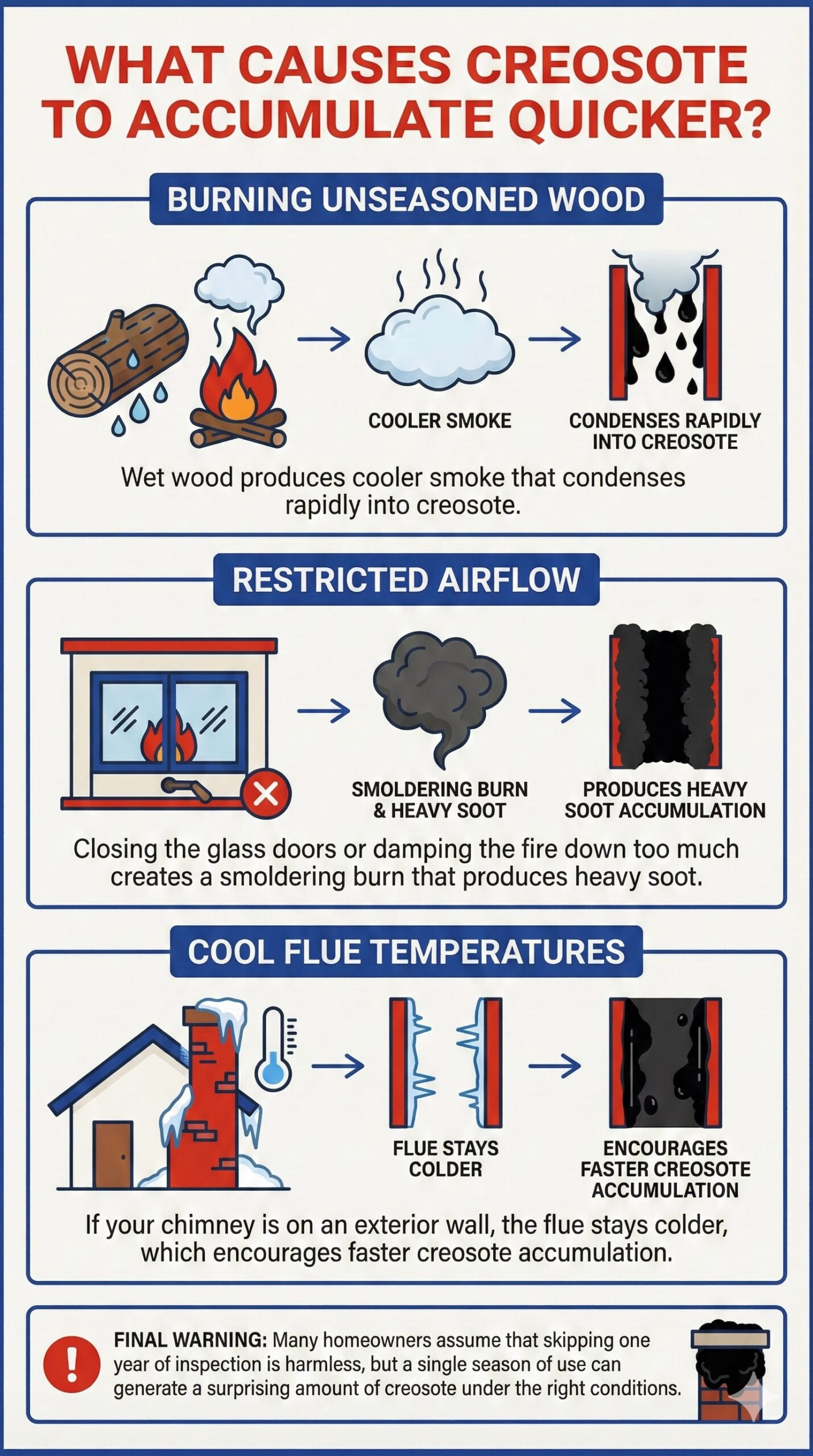
Many homeowners assume that skipping one year of inspection is harmless, but a single season of use can generate a surprising amount of creosote under the right conditions. The rate of accumulation depends on fuel quality, burning habits, and air supply. If these factors were not ideal during the previous winter, your chimney could be harboring a dangerous fuel source right now.
Creosote is a tar-like byproduct of burning wood. It is highly flammable and can take different forms, ranging from a dusty soot to a shiny, hard glaze. If you missed your last inspection, you might be unaware of substantial buildup caused by:
- Burning unseasoned wood: Wet wood produces cooler smoke that condenses rapidly into creosote.
- Restricted airflow: Closing the glass doors or damping the fire down too much creates a smoldering burn that produces heavy soot.
- Cool flue temperatures: If your chimney is on an exterior wall, the flue stays colder, which encourages faster creosote accumulation.
If this material ignites, it can cause a chimney fire that burns at temperatures exceeding 2,000 degrees Fahrenheit. This intense heat can crack liners and damage masonry in a matter of minutes. Our annual inspections serve as a critical check to ensure that the previous season’s burning habits didn’t leave behind a dangerous legacy. We sweep the system to remove this fuel, essentially resetting the safety of the chimney for the upcoming winter.
Does Freeze/Thaw Weathering Accelerate Deterioration in Colder Climates, and How Can Waterproofing Slow It Down?
Freeze-thaw weathering is a significant threat to masonry in Minnesota. Bricks and mortar are porous materials, meaning they naturally absorb moisture from rain, sleet, and melting snow. In a warmer climate, this moisture might simply evaporate without causing harm. In Anoka, however, temperatures frequently fluctuate across the freezing point. When the water trapped inside the masonry freezes, it expands by approximately nine percent. This expansion exerts internal pressure on the brick and mortar, creating microscopic cracks.
As this cycle repeats throughout the winter and early spring, those small cracks widen and compromise the chimney’s structure. We often see several stages of damage resulting from this process:
- Spalling: This occurs when the face of the brick pops off or flakes away, leaving the softer interior exposed to the elements.
- Gaping mortar joints: The freezing water can push the mortar out from between the bricks, creating gaps that allow even more water to intrude.
- Structural instability: Over many seasons, severe freeze-thaw damage can lead to a chimney that leans or becomes structurally unsound.
Waterproofing is the most effective method for slowing down this deterioration, but the type of product used matters immensely. We apply a vapor-permeable water repellent rather than a film-forming sealer. A standard sealer can trap moisture inside the brick, which accelerates spalling when that trapped water freezes. A vapor-permeable treatment allows the masonry to “breathe,” letting internal vapors escape while preventing liquid water from entering from the outside. This treatment helps maintain the structural integrity of the chimney for much longer than untreated masonry.
Serving Anoka, MN: The Halloween Capital of the World
We are proud to serve the community of Anoka, a city with a unique spirit and a rich history. Located where the Rum River joins the Mississippi, Anoka offers beautiful waterfront views and outdoor recreation at places like Akin Riverside Park. The geography of the area, with its river valleys and mature trees, makes it a beautiful place to live, though the wind coming off the water can certainly test the durability of local homes.
Anoka is perhaps best known as the “Halloween Capital of the World,” a title the community embraces with parades, contests, and a month-long celebration every October. This tradition speaks to the strong sense of community here. Residents take pride in their town and their homes. From the historic Victorian houses in the downtown district to the cozy ramblers in the neighborhoods, there is a diverse range of architecture here. At Jack Pixley Chimney Sweeps, we love being a part of this community. We understand the specific needs of Anoka homes and are dedicated to helping our neighbors keep their properties in top condition.
Are Old, Unlined Chimneys More Prone to Hidden Interior Decay Even When the Exterior Bricks Look Strong?
It is quite common, especially in older Anoka homes, to find chimneys that look pristine on the outside but are deteriorating on the inside. This is particularly true for unlined chimneys. Before the mid-20th century, many chimneys were built without a clay tile or metal liner. In these systems, the hot flue gases and smoke come into direct contact with the interior brick and mortar.
The decay occurs because combustion byproducts are naturally acidic. As smoke cools near the top of the chimney, it condenses and deposits corrosive residues on the masonry. Over time, this acid eats away at the mortar joints from the inside out. Since the exterior bricks are not exposed to these acidic gases, they often remain in great shape while the interior crumbles.
We look for specific hazards associated with unlined chimneys during our inspections:
- Heat transfer: Without a liner to act as an insulator, heat moves rapidly through the masonry to adjacent wood framing, increasing the risk of pyrolysis and subsequent ignition.
- Gas leakage: Eroded mortar joints can create pathways for carbon monoxide and smoke to migrate into living spaces or attics.
- Reduced draft: A rough, deteriorating interior surface creates friction that slows down the smoke, leading to poor draft and increased creosote buildup.
If we find that your chimney is unlined or that the original liner has failed, we can discuss options for relining the system. A modern liner acts as a conduit for the smoke, protecting the masonry and providing a correctly sized path for venting fumes safer and more effectively.
How Does a Chimney Professional Detect Microscopic Cracks in Liners That Aren’t Visible to the Naked Eye?
A visual inspection with a flashlight is useful, but it has severe limitations. The human eye cannot see the entire length of a flue, nor can it detect hairline fractures in a clay tile liner located twenty feet up a dark shaft. To bridge this gap, we utilize specialized video inspection technology. This is often referred to as a Level 2 inspection component.
We insert a camera system into the flue, which feeds live video to a monitor. This allows our technicians to examine the interior of the chimney inch by inch. We look for specific indicators of damage that are invisible without this technology:
- Thermal shock cracks: These are often hairline fractures caused by a chimney fire or rapid heating; they can open up under heat and allow flames to reach the home structure.
- Missing mortar: Gaps between flue tiles can be hard to spot from a distance but are obvious on camera.
- Shifting tiles: We can see if the liner sections have shifted out of alignment, which can impede draft and trap debris.
Detecting these microscopic issues is vital. A crack that seems insignificant when cold can expand significantly when the fireplace is in use. By identifying these flaws early, we can recommend repairs that prevent smoke leakage or structural fire hazards. This technology provides you with concrete evidence of your chimney’s condition rather than just an educated guess.
How Do Spring Pollen or Autumn Leaves Contribute to Blockages Compared to Winter Ice?
While winter ice can damage masonry, spring and autumn bring debris that physically obstructs the flue. In a city with as much greenery as Anoka, organic debris is a constant battle for chimneys that lack proper caps. The type of blockage varies by season, but the result – a chimney that cannot breathe – is the same.
In the autumn, falling leaves and twigs are the primary culprits. If you have large trees overhanging your roof, wind can deposit a thick layer of debris into the chimney. This material is dry and extremely combustible. Lighting a fire beneath a plug of dry leaves can start a fire at the top of the chimney immediately. Even if it is wet and decomposing, it creates a seal that forces smoke back into the house.
Spring brings a different challenge: nesting animals. Chimney Swifts, specifically, are birds that favor vertical masonry shafts for their nests. Their nests are constructed of twigs cemented together with saliva, creating a dense, bracket-like structure attached to the chimney walls. Raccoons and squirrels are also common invaders during the spring.
We inspect for these specific seasonal intrusions:
- Nesting materials: We check for twigs, fur, or bird droppings on the smoke shelf.
- Organic compost: We look for decomposing leaf matter that may have fallen during autumn storms.
- Cap integrity: We ensure the mesh screen on your chimney cap is intact to prevent future animal entry.
Unlike ice, which is a structural threat, these blockages are immediate ventilation hazards. Identifying and removing them is essential before you attempt to light a fire.
Trusted Chimney Inspections in Anoka, MN
Your home is your sanctuary, and at Jack Pixley Chimney Sweeps, we are dedicated to helping you keep it that way. We combine local knowledge of Anoka’s climate and housing stock with advanced diagnostic tools to provide inspections you can trust. Do not wait for smoke to fill the room before calling for help.
Contact us today to schedule your annual chimney inspection and enjoy the peace of mind that comes with a safer, well-maintained fireplace.