When homeowners in Dellwood start noticing cracking mortar, smoky fires, or water leaking into the firebox, they want a chimney company that understands the realities of Minnesota weather. At Jack Pixley Sweeps, we’ve worked on thousands of chimneys across the northeast metro, and we’ve seen how freeze/thaw cycles, heavy winds, and moisture can take a toll fast. Here’s why our team is often the right choice when you need chimney repair services near you that are handled with care and local expertise.
How Do We Handle Chimney Damage Caused by Freeze/Thaw Weathering?
Minnesota winters can turn a small masonry flaw into a serious issue. Moisture seeps into the brick, freezes, expands, and forces cracks wider. We focus on stabilizing the chimney while helping slow down future deterioration.
- Tuckpointing to replace failing mortar joints
- Brick replacement when spalling or cracking appears
- Waterproofing that helps limit future moisture intrusion
- Detailed inspections that spot early-stage cracking before it spreads
What Makes Us Ready for High-Wind or Tornado-Related Chimney Damage?
Strong winds across Dellwood and White Bear Lake can shift a chimney or crack the crown in a single storm. Many homeowners call us asking how chimneys hold up in tornado-level winds or whether a slight lean means collapse is possible. Our team assesses storm damage methodically so you’re not guessing.
- Structural evaluations to determine tilt, crown fractures, or flashing damage
- Reinforcement solutions that stabilize weakened chimney bases
- Crown rebuilds to keep wind-driven rain from soaking the interior
- Safety guidance for homeowners unsure if their fireplace is usable post-storm
How Quickly Can Mortar Decay Become a Structural Risk?
The question we hear often: “Could mortar really crumble this much in one season?” In Minnesota, absolutely. Freeze–thaw cycles can accelerate decay dramatically. We focus on rebuilding strength before gaps compromise the flue or the chimney’s stability.
- High-strength mortar that performs better in extreme temperature swings
- Removal of loose, sandy, or hollow joints
- Camera scans to see whether gaps have opened inside the flue
- Maintenance plans tailored to your chimney’s age and material
Are Older, Unlined Chimneys More Likely to Hide Interior Damage?
Dellwood has plenty of older homes, many with unlined chimneys that look solid outside but deteriorate quietly inside. We use diagnostic tools that reveal issues simply not visible with a flashlight.
- Video flue inspections to detect microscopic cracks or voids
- Recommendations for stainless steel liners when appropriate
- Smoke testing to evaluate drafting patterns and hidden gaps
- Repair options that bring older systems closer to modern performance expectations
Can Nearby Construction or Tree Growth Change Your Chimney’s Draft?
Homeowners sometimes think draft problems just appear out of nowhere, but often they’re the result of new rooflines, additions, or tree growth. Even years after the home was built, airflow can shift. We troubleshoot the root cause, not just the symptoms.
- Draft diagnostics to measure pressure and airflow
- Chimney height or cap adjustments when necessary
- Flue sizing evaluations for wood, gas, or pellet appliances
- Recommendations for trimming or removing obstructing tree limbs
What Should Homeowners Do After Heavy Rain, Ice Dams, or Flooding?
Lighting a fire in a damp flue can cause smoke issues, rapid creosote accumulation, or even damage from steam expansion. Water is one of the most destructive forces for any chimney, and we know how Dellwood’s wet springs and icy winters can compound the problem.
- Crown and flashing repairs that stop water intrusion
- Moisture-meter testing after storms or ice dam events
- Rust and component evaluations inside the firebox and smoke shelf
- Waterproofing to help slow down future absorption
Can a Missed Inspection Really Lead to a Chimney Fire?
It surprises many homeowners how quickly creosote can accumulate. Burning unseasoned wood, using the fireplace with a cold or damp flue, or missing just one annual inspection can raise the risk noticeably. We restore and repair systems so you’re starting the season in the best condition possible.
- Mechanical sweeping tailored to your fuel type
- Creosote-level assessments that guide the cleaning method
- Troubleshooting cold-flue smoke backups
- Guidance on wood moisture, fuel types, and burning practices
Why Do Dellwood Homeowners Keep Choosing Our Team?
At Jack Pixley Sweeps, we pair technical expertise with a personal approach. We know Dellwood’s lake-effect winds, brick styles, and older home construction patterns. We also know how to spot problems when they’re still manageable, not when they’ve already turned into major repairs. Our goal is to keep your chimney performing as safely and reliably as possible in a climate that challenges masonry constantly.
If you’re noticing cracks, leaks, smoke issues, or anything that feels “off” with your chimney, we’re here to take a look, explain what’s happening, and recommend the right path forward. Book your next chimney repair with us today.
Warm weather has finally arrived. The warm temperatures and longer days mean many homeowners have finished using their fireplaces until fall. While many of us tend to forget about our fireplaces until the first cold snap of fall, now is actually the perfect time to have chimney maintenance completed.
Spring and summer are the perfect time for chimney repairs!
With hot summer days just around the corner, few homeowners are using their fireplaces. Because of this, spring and summer are the perfect time to have chimney maintenance and repairs completed. Whether it is an annual sweeping, repairs to the masonry or major chimney construction, summer is the perfect time of year to have your fireplace and chimney repaired. Below are three reasons that this is the perfect season for chimney repairs.
- Fireplace use is not disrupted. When chimney repairs are done in the fall or winter, the fireplace cannot be used until the repairs are done. This can be a problem, particularly if cold or inclement weather leads to delays. Having repairs done in the summer does not disrupt fireplace use. The warm temperatures and mild weather mean that repairs can be done on schedule.
- Get an appointment that works with your schedule. Because fireplaces are in heavy use during the fall and winter, they are extremely busy seasons for chimney sweeps. This can make convenient appointment times hard to get or cause weeks-long waiting periods. Spring and summer are slower months, making it easier to get convenient appointment times that work with your schedule.
- Make sure your fireplace is ready for the next burning season. There is no worse feeling than wanting to use your fireplace and realizing it is damaged, dirty, or in need of repairs. Having chimney maintenance done during the summer ensures your fireplace is ready to use when the first cool days of fall arrive.
Schedule your next sweeping or inspection today!
You don’t have to wait until you’re ready to use your fireplace to have it swept and inspected. Spring and summer are the perfect time for chimney maintenance; having your chimney swept after a long burning season ensures it is clean, free from blockages and debris, and ready to use once fall arrives.
A chimney inspection can also be done during the summer to check for any signs of damage or deterioration to the fireplace, flue, and other chimney components. If you are experiencing any fireplace performance problems such as drafting issues or ongoing leaks, a chimney inspection can also be used to diagnose the underlying cause of the problem.
While your fireplace may be the last thing on your mind, this is the best time of year to fix it. To ensure your fireplace is ready to use when fall arrives, contact the chimney experts at Jack Pixley Sweeps today!
While a little water in your fireplace might seem like only a minor inconvenience, it can spell major trouble for your chimney system. Whether it’s a few droplets, a large puddle, or even a musty smell, the presence of water in your fireplace and chimney can cause damage to many different chimney components.
Causes of leaky chimneys
Because chimneys are complex structures with a number of different components, there is no one guaranteed cause of a leaky chimney. However, there are several common ways that water can get in; below are four of the most common causes of chimney leaks.
- Chimney cap: Chimney caps are metal covers that protect the top of the flue and keep animals, debris, and moisture out of the chimney. If a chimney cap is installed incorrectly, does not fit properly, or is damaged, water can easily enter the flue and chimney.
- Chimney crown: The chimney crown is the mortar slab that covers and seals the top of the chimney. Well-built chimney crowns are typically made of concrete or other stone to prevent the chips and cracks associated with long term exposure to the elements. Likewise, a good chimney crown should have overhangs and be slightly sloped in order to prevent water from pooling or draining directly onto the masonry of the chimney.
- Damaged masonry: Damage caused by water can cause bricks to crack and spall; not only does this let additional water into the fireplace system, but it can also affect the structural stability of the chimney structure.
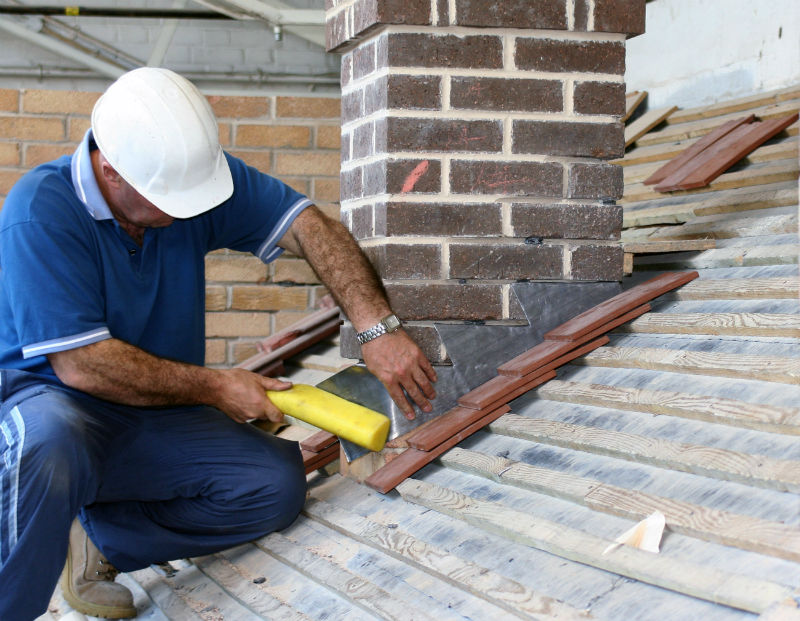
- Flashing: Chimney flashing are the layered metal strips that seal the joint between the roof and the chimney structure. Flashing can lose its watertight seal due to exposure to the elements, incorrect installation, damage from storms, or if changes to the roof line are made.
Repairing a leaky chimney
The first step to fixing a leaky chimney is to identify and repair the underlying cause of the leak. A chimney inspection done by a certified chimney sweep is often the best way to uncover where water is getting into the chimney system; by fixing how the water is getting in first, you can avoid needing the same chimney repairs because of water damage again and again.
In addition to repairing your leaky chimney, preventative maintenance can be done to protect your chimney against water damage. Waterproofing is one of the best ways to protect your masonry against water entry. Our professional-grade SaverSystems sealants are specially designed to work on masonry; these sealants allow the masonry to retain its semi-porous nature, allowing gasses to pass through but preventing moisture from getting in. Water repellent sealants can even be used if your masonry already has areas of water damage!
If you have a leaky chimney, it is important to have it repaired as soon as possible. Contact the experts at Jack Pixley Sweeps today for more information on how we can fix your leaky chimney!

The mark of a CSIA certified chimney technician
As winter weather approaches, now if the time of year when many homeowners having their chimneys swept and cleaned. However, it is important to be wary of who is cleaning your chimney. Instead of going with the cheapest company or hiring someone who simply comes to the door, homeowners should find a CSIA certified chimney sweep.
A certified chimney sweep can do more than just clean your chimney; these highly trained professionals can make sure your fireplace system is in good condition and is safe to use all season long. This year, trust a CSIA certified technician with your chimney and fireplace cleaning!
What is CSIA certification?
The Chimney Safety Institute of America, or CSIA, is a non-profit organization dedicated to chimney and fireplace safety, education, and certifications. The CSIA is widely considered the most prestigious professional organization in the chimney industry, and chimney sweeps with a CSIA certification have had to undergo years of rigorous education and testing.
Because there are so few standards and controls on who can call themselves a chimney sweep, it is important to work with a technician who has professional certifications like those offered by the CSIA. Certified chimney sweeps have a broad knowledge of chimney topics and issues such as:
– Recommended safety techniques and practices
– Current local and national building codes
– Fireplace dynamics and construction
– Fireplace, stove, and insert installation
– EPA emissions requirements for heating appliances
CSIA certifications are not for life; chimney sweeps must retest every three years in order to maintain their certifications. Doing this ensures that CSIA certified chimney sweeps are up to date on the latest advancements in the fireplace industry.
Finding the right chimney sweep
Choosing a chimney sweep is sometimes as simple as opening up the phonebook or doing a quick search on Google. However, before deciding who to trust with your chimney and fireplace cleaning it is important to learn about their certifications along with other information about their business. In addition to having a Certified Professionals Locator, the CSIA also recommends asking questions similar to these before hiring a chimney sweep.
– How long has the company been in business?
– Can the company provide current references?
– Does the company have unresolved complaints with city or state consumer protection agencies or the Better Business Bureau?
– Does the company carry a business liability insurance policy to protect your home and furnishings against accidents?
– Will a CSIA Certified Chimney Sweep be on the job site?
Working with a CSIA certified chimney sweep means that you are working with a highly trained professional, not just some guy with a truck. If you’re in the Minneapolis area, trust Jack Pixley Sweeps to take care of your chimney and fireplace cleaning needs. Contact us today to schedule your next chimney appointment!
After a long winter, spring is a welcome change in season. Unfortunately, the same spring weather that brings warmer temperatures and longer days also leads to lots and lots of rain, which can be extremely damaging to your chimney system.
Whether your chimney is currently in good condition or has experienced some previous water damage, consider waterproofing your chimney this spring. Waterproofing your chimney is an excellent way to extend the life of your masonry chimney and keep it looking beautiful for years to come.
How water damages chimneys
Although they are designed to be exposed to the elements, water is still one of the most damaging forces for a chimney and can affect many different parts of your fireplace system. However, moisture can be most damaging to your masonry, causing it to chip, crack, spall, and even fall away from the chimney structure.
One of the primary ways that water damages masonry is through the freeze thaw cycle. During this process, small amounts of water are absorbed by the brick, only to freeze and expand. When the water melts, it leaves behind holes that become gradually larger and larger, leading to severe masonry damage.
Because the presence of rain and other moisture is an inevitable part of nature, homeowners should take proactive steps to protect their masonry structures by having them professionally waterproofed. Waterproofing can protect your masonry against water damage, significantly extending its durability.
How waterproofing works
Applying a waterproofing product to your chimney is one of the single greatest things you can do to protect your masonry. The products used by fireplace professionals are specially designed for use on chimneys and other masonry structures. This means that they are able to prevent new moisture from getting in without trapping existing moisture inside; this is extremely important as other sealants, such as paint, trap water in the masonry and can lead to further damage. In addition to not trapping water inside the brick, these products also allow the masonry to retain its naturally porous properties by allowing hot air and gasses to escape.
The products we use
At Jack Pixley Sweeps, we proudly recommend and use the SaverSystems waterproofing products.
- ChimneySaver: The ChimneySaver water repellent is specially formulated for use on the bricks and mortar of your chimney structure. It works by penetrating deep into the brick, forming a lasting seal against water that still allows trapped moisture and gas to escape. ChimneySaver can significantly extend the life of your masonry and offer long term protection against water, even in homes with existing moisture damage.
- CrownCoat: CrownCoat is a flexible, waterproof sealant that is applied to the chimney crown or wash. CrownCoat is an extremely cost effective way to stop water entry in your chimney crown and can be used on chimneys with existing minor cracks and deterioration. When applied correctly, CrownCoat also features a 15 year warranty against further water intrustion.
- FlashSeal: FlashSeal is a rubber membrane that can be applied to existing flashing. This product is especially useful in homes where the flashing has begun to deteriorate, chip, and lose its watertight seal. When applied correctly with reinforcement fabric, FlashSeal is guaranteed to last up to seven years.
Protect your chimney against this year’s April showers – contact Jack Pixley Sweeps today to schedule your waterproofing appointment!
Spring is the perfect time to get your chimney’s brickwork repaired!
Winter can be a particularly rough time of year for fireplace systems. In addition to heavy use, chimneys are also faced with exposure to the harsh winter elements, including frigid temperatures, ice, snow, and freezing rain. Because of this, many homeowners find that their masonry fireplaces and chimneys are in need of repair when spring finally arrives.
Spring is the perfect time of year to have masonry repair work done. The mild temperatures and conditions allow work to be quickly completed with a minimum of weather-related delays. Likewise, because most homeowners do not use their fireplaces in the spring, our appointments for spring masonry repairs are often quickly filled.
Water damage and your masonry chimney
Chimneys are built strong to withstand the force of the elements. However, even the best built chimneys have one major enemy: water.
Water damage can quickly damage any masonry structure, sometimes in as little as one season. Although bricks are designed to be naturally porous, too much water can overwhelm them. When water is absorbed by the bricks during the winter, it freezes and expands. When the water melts, it leaves behind bigger cracks and holes, allowing even more water to enter the bricks. This freeze thaw process can lead to bricks cracking and even falling away from the chimney structure if left unrepaired.
Water can also find its way into your fireplace and chimney system through defective chimney caps, damaged or improperly installed flashing, or due to a number of other possible causes. Because it can be difficult to pinpoint the cause of water entry and damage, it is recommended to have your entire chimney system professionally evaluated if a leak is apparent.
Why is chimney maintenance important?
While a few small cracks in the brick may not seem like a major issue, if left unrepaired it can quickly turn into one. Unrepaired chimney damage will only continue to get worse, jeopardizing the health and safety of you and your family. Even no longer using the fireplace is a good option; even if you aren’t using your damaged fireplace, the masonry will still continue to decay.
In order to identify and repair masonry damage as soon as possible, it is recommended that homeowners have a chimney inspection performed each year. “A chimney inspection is like an annual dental check-up,” says Ashley Eldridge, Director of Education for the CSIA. “It’s preventative maintenance that helps minimize potential hazards.”
Our masonry services
At Jack Pixley Sweeps, we can do much more than just clean your chimney. We offer a wide range of masonry services for our customers. Since 1977 we have proudly been providing high quality masonry services to our friends and neighbors in the Saint Paul and Minneapolis area.
Unlike a general contractor, our skilled masons are knowledgeable about the codes, clearances, and other safety standards associated with rebuilding and repairing masonry chimneys. In addition, by choosing a chimney company to make the repairs you can rest assured that our masonry work will be not only aesthetically beautiful, but also safe and functional.
Our spring schedule has already begun filling up with masonry repair appointments. If your chimney needs to be repaired, don’t wait any longer – contact Jack Pixley Sweeps today to schedule your spring masonry repairs!